

How to Measure Windows for a Perfect Fit

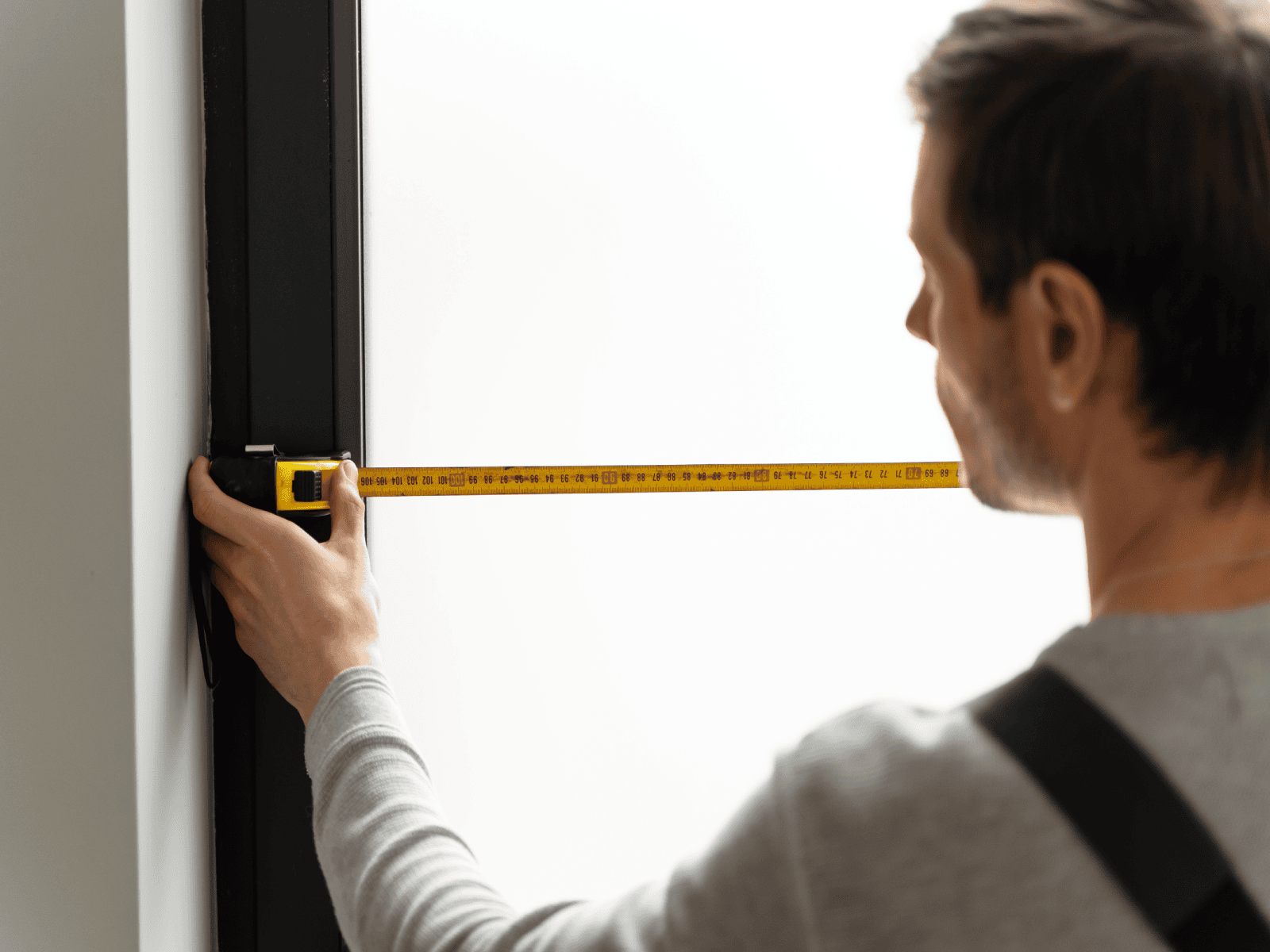
Quick answer: To measure a window for replacement, take the width at three points (top, middle, and bottom) and the height at three points (left, centre, and right), always using the smallest measurement. Finally, measure both diagonals to check the opening is square before ordering your new window.
Even a difference of a few millimetres can lead to draughts, poor insulation, or an expensive remake, so accurate measurements are essential. If you haven’t chosen a window style or frame material yet, our complete guide to choosing new windows is a great place to start.
How to Measure for Replacement Windows
Measuring a window doesn’t require specialist tools—just a steel tape measure, a pencil, and a little patience.
Before you begin, remember two simple rules:
- Measure the brick or plaster opening, not the existing frame.
- Record every measurement in millimetres (mm).
Whether you’re measuring from inside or outside, the same principles apply. If your window has trim or architrave, measure to the inside edge of the trim and let your supplier know, as this may affect the finished installation.
Should You Measure from Inside or Outside?
For most homes, replacement windows are measured from inside because the opening is easier to access. Professional installers will usually confirm the dimensions from outside as well, especially where brickwork, render, or external cladding could affect the final fit.
Measure Window Width
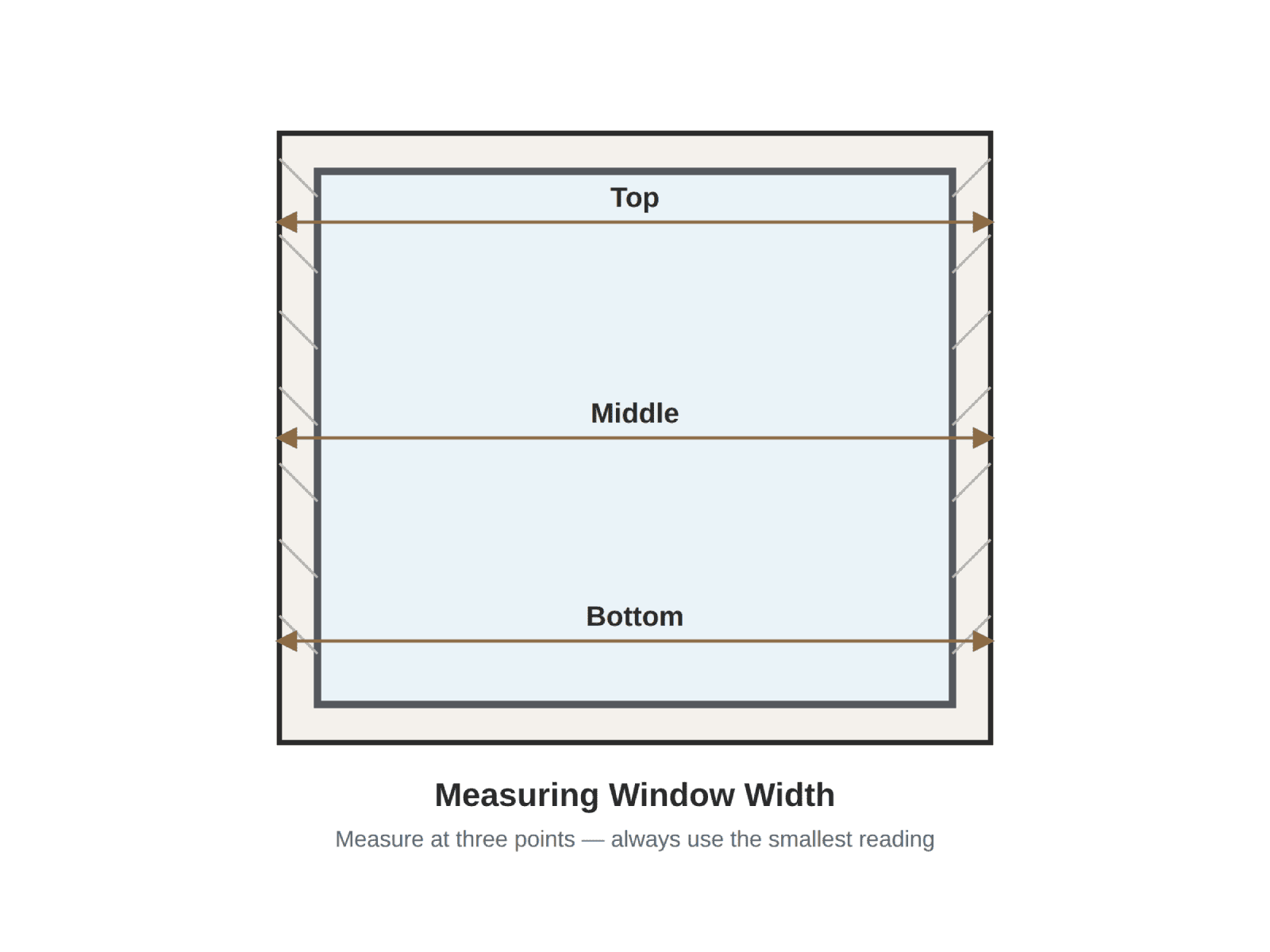
Measure horizontally across the opening at three heights — near the top, the middle, and near the bottom. Record all three figures and use the smallest one. Openings are rarely perfectly even, especially in older properties, so this step helps avoid ordering a window that’s slightly too wide to fit.
Measure Window Height
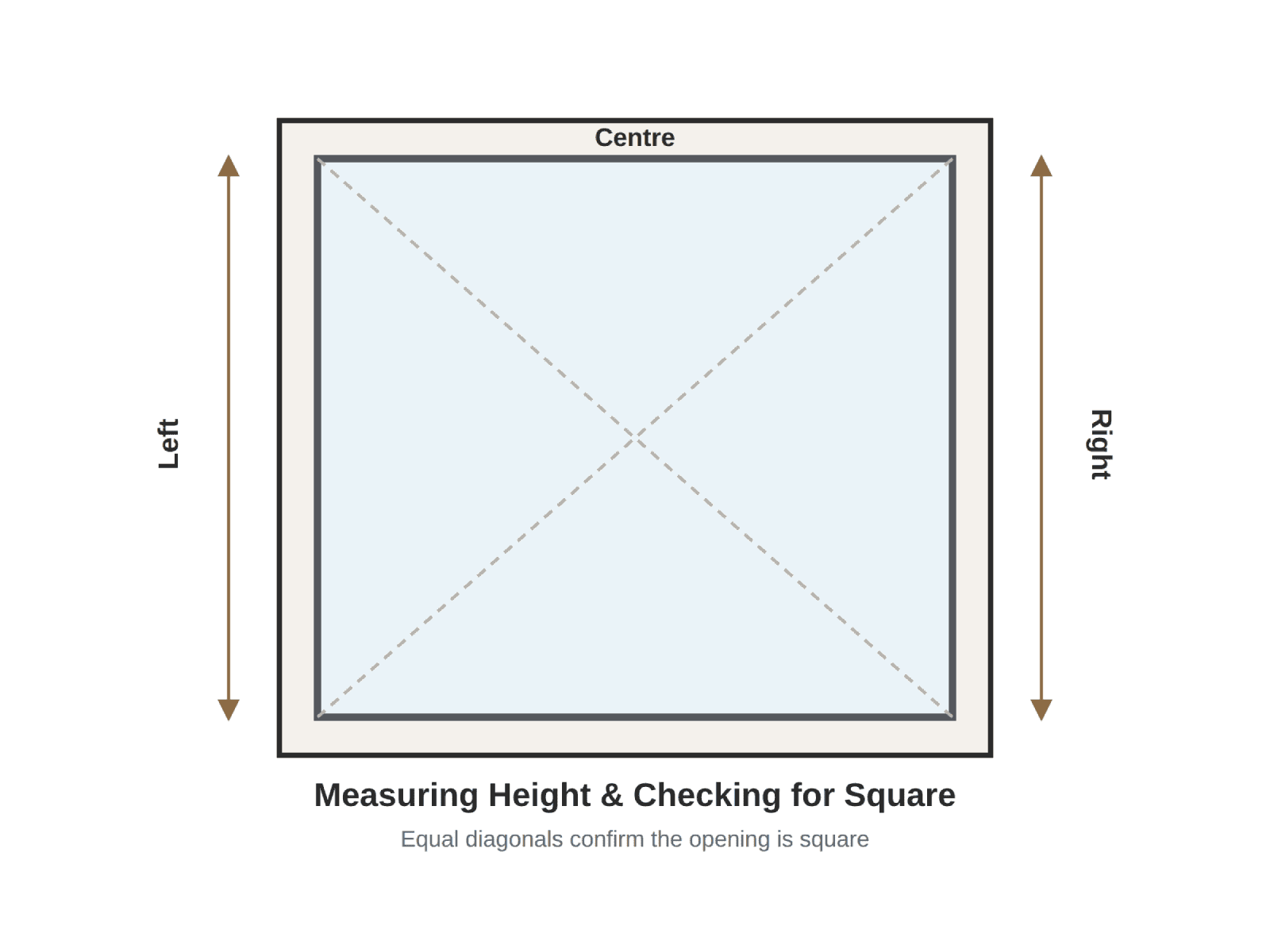
Measure vertically from the sill to the head of the opening at three points — left, centre, and right. As with width, use the smallest figure. If the window has a sub-sill or horn detail, measure to the point where the new frame will actually sit.
Why Measure Windows for Square Alignment?
Once you’ve measured the width and height, check whether the opening is square by measuring diagonally from corner to corner in both directions.
If both diagonal measurements are the same—or within a few millimetres of each other—the opening is considered square. A difference greater than around 10 mm may indicate movement in the building or an uneven opening, in which case a professional survey is recommended.
A window manufactured for a square opening may not fit properly if the opening is significantly out of square, resulting in uneven gaps, additional packing, or sealing issues.
Standard Window Sizes in the UK
Standard sizes are usually quicker to manufacture and often more cost-effective than bespoke frames, particularly for straightforward casement windows. That said, many UK homes — especially period properties — have openings that don’t match standard dimensions exactly.
| Size (W × H) | Typical Use |
| 600 × 900 mm | Small bedroom, bathroom |
| 900 × 1200 mm | Bedroom, dining room |
| 1200 × 1200 mm | Living room |
| 1200 × 1500 mm | Large reception room |
| 1800 × 1200 mm | Feature or picture window |
If your opening falls close to one of these sizes, a standard window may be suitable. Otherwise, made-to-measure windows provide a more precise fit.
Whether you choose aluminium or uPVC, accurate replacement window measurements help ensure a smoother manufacturing and installation process. Working with an experienced windows and doors supplier in the UK also reduces the risk of costly sizing mistakes before production begins.
How Material Choice Affects Sizing
Although the opening size remains the same, your choice of frame material affects the amount of visible glass once the window is installed.
- uPVC frames are typically 60–70 mm wide, providing excellent thermal performance with a balanced glass-to-frame ratio.
- Aluminium frames are often only 35–45 mm wide, creating slimmer sightlines and allowing more natural light into the room.
If you’re deciding between the two, our uPVC vs aluminium comparison guide explains the differences in appearance, maintenance, durability, and long-term performance.
Whichever material you choose, installing windows with good thermal performance can improve comfort throughout the year. Learn more about how energy-efficient windows improve home insulation and help reduce heat loss and energy bills.

Measurement Considerations by Window Type
The basic measuring process stays the same across all styles, but there are a few additional details worth noting depending on the window you’re replacing.
uPVC Windows
uPVC frames are generally more forgiving of small variations, although the window style still influences what should be recorded.
- UPVC Casement Windows — note whether it’s a single or multi-panel opening.
- UPVC Flush Casement Windows — confirm sash overlap if you’re matching an existing style.
- UPVC Tilt & Turn Windows — check there’s enough internal clearance for the sash to open fully.
- UPVC Sliding Sash Windows — measure the overall opening carefully and make sure the head and sill are level, as sliding sashes rely on accurate alignment for smooth operation.
- UPVC Bay & Bow Windows — measure each panel individually, including projection depth and corner angles.
Browse the full uPVC windows range for more information.
Aluminium Windows
Aluminium frames have slimmer sightlines, so accurate measurements become even more important because there’s less frame available to disguise small fitting errors.
They also maximise the visible glass area, making them a popular choice where natural light is a priority.
- Aluminium Casement Windows— slim sightlines make glass dimensions more sensitive to inaccurate measurements.
- Aluminium Flush Casement Windows — check squareness carefully because flush frames leave little room for adjustment.
- Aluminium Sliding Sash Windows — measure the full frame depth so the sliding mechanism has sufficient clearance.
See the complete aluminium windows range for available styles.
Final Thoughts
Measuring a window accurately is one of the most important steps in any replacement project. Taking measurements at multiple points, checking the opening is square, and understanding how different window styles affect the process will help ensure your new windows fit properly and perform as intended.
If you’re unsure about any measurement—or you’re replacing bay windows, heritage windows, or unusually shaped openings—it’s worth arranging a professional survey. A final site measurement can prevent costly mistakes and ensure your new windows are manufactured to the correct dimensions from the start.
Frequently Asked Questions
- How do I measure a window for replacement?
Measure the width at the top, middle, and bottom, then measure the height on the left, centre, and right. Always use the smallest measurement and check both diagonals to confirm the opening is square. - Should I measure windows from inside or outside?
Most replacement windows are measured from inside the property because it’s easier to access the opening. Professional installers usually verify the dimensions from both sides before manufacturing. - Can I measure replacement windows myself?
Yes, if you’re replacing a standard window and can clearly access the opening. For bay windows, unusual shapes, or listed properties, a professional survey is strongly recommended. - Do replacement windows need to be smaller than the opening?
Yes. Replacement windows are typically manufactured slightly smaller than the structural opening to allow room for installation, insulation, and final adjustment during fitting. - What happens if my measurements are wrong?Even a small measuring error can prevent the window from fitting correctly, leading to delays, additional costs, or reduced thermal performance. If you’re unsure, it’s always best to arrange a professional survey before placing an order.